
- Sustainability (Materials & Environmental Impact) 70%
- Repairability & Serviceability 60%
- Performance & Enterprise Integration 90%
- Lifecycle Management & Longevity 80%
- Cost-effectiveness & TCO 60%
- End-of-Life Processing & Recyclability 70%
- Power Consumption 50%
From a sustainability standpoint, Dell has made some improvements by incorporating LPDDR5X memory, which is more power-efficient than traditional DDR-based architectures. However, the inclusion of high-bandwidth memory (HBM3e) increases overall energy consumption. This workstation is power-intensive, particularly under sustained AI workloads, which may be a concern for organizations looking to optimize energy efficiency in large-scale deployments.
Component reusability and recyclability remain areas for improvement. The proprietary architecture, particularly the soldered HBM3e memory and integrated CPU-GPU design, limits repairability and upgrade potential. A more modular design would enhance sustainability by allowing individual components to be replaced rather than requiring full system replacements. Additionally, increasing the use of recycled materials in the chassis and providing clearer information on the system’s lifecycle carbon impact would strengthen Dell’s environmental efforts. Organizations that prioritize long-term sustainability should carefully assess whether the workstation’s power consumption and limited upgrade paths align with their operational goals.
Technical Specifications
- Processor: NVIDIA GB300 Grace Blackwell Ultra Desktop Superchip
- Memory: 784 GB Unified System Memory
- 288 GB HBM3e (GPU)
- 496 GB LPDDR5X (CPU)
- Networking: NVIDIA ConnectX-8 SuperNIC (up to 800 Gbps)
- Storage: PCIe Gen5 NVMe support
- Power Consumption: Estimated high due to HBM3e and AI workloads
- AI Optimization: Native support for NVIDIA AI Enterprise stack
Analysis
Sustainability (7/10)
Dell has integrated LPDDR5X memory to reduce power consumption, but the inclusion of HBM3e and high-performance networking increases overall energy demand. The chassis and cooling system may incorporate some recycled materials, but there is little publicly available information on significant sustainability improvements related to modularity or recyclability.
Repairability & Serviceability (6/10)
While the system includes modular storage and networking, the proprietary design of the NVIDIA GB300 chip limits upgradeability. HBM3e memory is soldered directly to the GPU, making memory expansions impossible. Networking and storage components are user-accessible, but CPU and GPU servicing is more restrictive compared to traditional x86-based workstations.
Performance & Enterprise Integration (9/10)
This workstation is well-suited for AI workloads, offering high memory bandwidth, low-latency processing, and enterprise-grade networking. The hybrid CPU-GPU memory architecture is optimized for AI model execution, deep learning, and scientific simulations. However, compatibility with existing x86 software environments may be a consideration for enterprises that rely on legacy systems.
Lifecycle Management & Longevity (8/10)
The GB300-based architecture is expected to receive long-term software support from NVIDIA, with ongoing AI optimizations and cloud integration. The system’s high-performance hardware suggests a longer operational lifespan than standard workstations. However, the proprietary nature of the NVIDIA platform could limit upgrade paths, affecting flexibility in mixed IT environments.
Cost-effectiveness & TCO (6/10)
Pricing details have yet to be announced, but given its high-end AI capabilities and specialized hardware, this workstation is expected to carry a premium price tag. Organizations that rely heavily on AI acceleration and large-scale processing may find long-term value in its capabilities, though the high upfront cost could be a barrier for smaller enterprises.
End-of-Life Processing & Recyclability (7/10)
Dell has implemented sustainability initiatives in previous workstation models, and similar efforts are likely here. However, the integration of HBM3e memory and NVIDIA’s proprietary architecture may complicate recycling. While networking cards, storage drives, and power supplies remain modular, the central compute unit’s recyclability is uncertain due to limited disassembly options.
Power Consumption (5/10)
Despite some efficiency improvements with LPDDR5X memory, the workstation’s overall power consumption remains high. The use of HBM3e, which is known for its energy-intensive performance, combined with a high-performance AI-optimized GPU, results in a system that consumes significant power, especially under sustained workloads. Organizations deploying this workstation at scale should consider the energy impact, as it may contribute to higher operational costs and increased environmental footprint.
What You Should Know If You Are a Recycler
Recyclers may face challenges with this workstation due to the integrated design of the CPU and GPU, as well as the soldered HBM3e memory. These components are difficult to separate, limiting material recovery. While the chassis and some storage components can be repurposed, the central compute unit may not be easily recyclable. Specialized recycling methods would be required to handle the high-performance memory and processing units, making this workstation less ideal for traditional recycling workflows.
What You Should Know If You Are a Refurbisher
Refurbishers may find it difficult to extend the usable life of this workstation due to the lack of modular components. The soldered HBM3e memory means that users cannot upgrade RAM, and any GPU or CPU failures would likely require full system replacement rather than repair. While storage drives and networking cards can be replaced, this workstation offers fewer opportunities for refurbishment compared to more modular enterprise systems.
What You Should Know About This Product’s Sustainability If You Are an IT Department in a Large Company
For IT departments, the high performance of this workstation must be weighed against its sustainability profile. The system has a long expected lifespan due to its processing power, but it lacks flexibility for future upgrades. IT managers should consider energy costs, as its high power consumption could impact operational expenses. Additionally, long-term maintenance may require vendor support due to limited serviceability. Companies prioritizing energy efficiency and modularity may find other workstations more aligned with their sustainability goals.
What You Should Know If You Are an ITAD Service Provider
ITAD service providers handling this workstation will need to consider its limited recyclability and refurbishing potential. Data security is manageable with modular storage, but the integrated CPU-GPU architecture may require different processing methods compared to standard x86-based systems. ITAD providers should prepare for challenges in resale and component extraction, as many parts of this system cannot be upgraded or easily replaced.
Final Thoughts
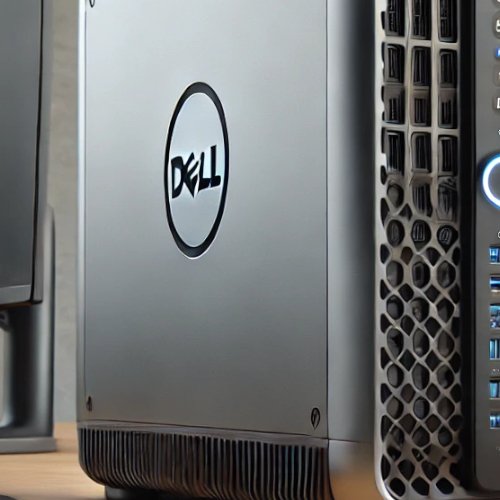
The Dell Pro Max with GB300 provides a strong computing option for AI research, scientific computing, and data-intensive applications. It delivers high memory bandwidth, fast networking, and AI optimization but comes with trade-offs in repairability, upgradeability, and power consumption. The high energy requirements may be a concern for organizations looking to control operational costs, particularly in large-scale deployments.
Organizations considering this system should carefully evaluate its long-term total cost of ownership, sustainability factors, and compatibility with existing IT infrastructure before deployment.